When a commercial property is refurbished or given a completely new purpose, there is a long list of things to think about. Layouts change, walls move, kitchens are installed, toilets are added, equipment arrives and suddenly a building that once housed a small office could be serving hundreds of customers every week. One thing that can easily be overlooked during all of that work is what is happening underneath the building.
The drainage system that served the previous business may still be there, but that doesn’t necessarily mean it is suitable for what the property is about to become.
A drainage system designed around a handful of office toilets and a staff kitchen, for example, could face very different demands if the same building becomes a restaurant. Likewise, converting a retail unit into a gym, salon, hotel or healthcare facility can completely change how much wastewater the property produces, where it comes from and what is going down the drains.
Understanding the existing drainage before a refurbishment is completed can therefore prevent some very expensive surprises later.
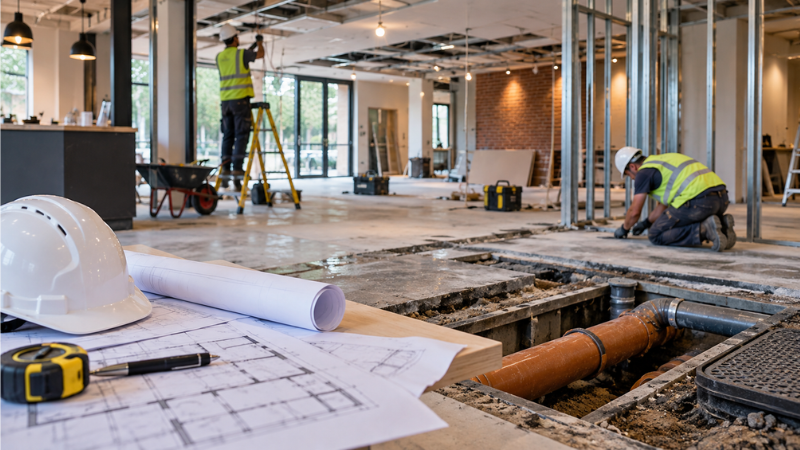
The Building Might Be Changing, but the Drains Aren’t
Commercial buildings often go through several lives. A property may have originally been built as offices, later divided into smaller units and then altered again when a new tenant moves in. Extensions might have been added over the years, toilets relocated and new kitchens connected into existing pipework. Above ground, these changes are usually obvious. Below ground, things can be considerably less clear.
Old pipework may still be present even though it is no longer used. Newer drainage might have been connected into much older systems, while previous alterations may not always be obvious from the plans available for the property.
This is one reason why assuming that the drainage layout matches the current building layout can cause problems. Before making significant changes to a commercial property, it can be useful to establish what is actually there.
From Office to Restaurant: A Very Different Demand
Imagine a relatively simple example. A commercial unit has spent the last 15 years as an office. It has two toilets, a couple of sinks and a small staff kitchen used mainly for making tea and washing mugs.
A new tenant takes over and turns it into a busy restaurant. Suddenly the drainage system could be receiving wastewater from commercial sinks, dishwashers, food preparation areas, customer toilets and cleaning operations throughout the day.
There is also the issue of fats, oils and grease (FOG), which are particularly important considerations for commercial kitchens. Without suitable management, FOG can cool and solidify inside drainage pipework, contributing to restrictions and blockages.
The building may look completely transformed once the refurbishment is finished, but the underground drainage could still be based around the requirements of that original office. That doesn’t automatically mean there will be a problem. It does mean the existing system is worth understanding before the new business becomes dependent on it.
For businesses operating commercial kitchens, appropriate grease management and grease trap solutions can also form an important part of protecting the drainage system.
It Isn’t Just Restaurants
Restaurants provide an obvious example, but a change in property use can affect drainage in many different sectors. A retail unit becoming a hair salon may suddenly have several wash stations operating throughout the day. An office converted into a gym could gain showers, changing facilities and additional toilets.
A large house converted into a hotel or guest accommodation could dramatically increase the number of bathrooms using the drainage system. An industrial unit taken over by a different type of business may introduce completely different processes and wastewater requirements.
Even subdividing one large commercial building into several smaller businesses can change how the drainage network is being used. None of these changes necessarily create drainage problems, but they can alter the demands placed on a system that may have been designed many years earlier for something completely different.
Do You Actually Know Where the Drains Go?
This sounds like a simple question, but on older commercial sites the answer isn’t always straightforward. Drainage plans may be incomplete, outdated or unavailable. Years of alterations can mean the system underground no longer reflects the original plans.
There may be redundant sections of pipework, hidden manholes, connections installed during previous refurbishments or drainage routes that simply aren’t where somebody expected them to be.
This becomes particularly relevant when new kitchens, toilets, showers or other facilities are being installed. Knowing where existing foul and surface water systems run can help those planning the work understand how the proposed changes interact with the existing drainage infrastructure.
A CCTV drain survey can be used to inspect the condition of drainage pipework internally, while drainage investigation and mapping can help build a clearer picture of the network across a site.
Finding out before the refurbishment is finished is usually much easier than investigating after new floors, walls and expensive fixtures have already been installed.
What Condition Is the Existing Drainage In?
Capacity and layout are only part of the picture. Condition matters too. If a building has been empty for some time before refurbishment, or if the drainage system is simply old, it may be sensible to inspect it before placing greater demands on it.
Potential issues can include displaced joints, cracks, root ingress, scale, accumulated debris or sections of damaged pipework. Some defects may have caused very little disruption under the previous use of the property. Once the building becomes busier and the system starts handling more wastewater, however, an existing weakness may become much more noticeable.
This is why drainage investigation before or during refurbishment isn’t simply about looking for a blockage. It is about understanding the condition of an important part of the building’s infrastructure before the business relies on it.
Watch Out for the Outside of the Building Too
Refurbishment projects often focus heavily on the interior, but external changes can affect drainage as well. Car parks may be resurfaced. Extensions can alter roof areas. Landscaping may change. New loading areas or hardstanding might be introduced.
All of this can affect how rainwater moves around the site. Gullies and surface water drainage need to remain accessible and able to deal with water effectively. Altering ground levels or covering existing drainage points without considering where water will travel can create problems that only become obvious during heavy rainfall.
There is also a very practical issue during construction itself: building materials and debris. Dust, cement, plaster, rubble and other construction waste should not be allowed to enter the drainage system. Once materials harden or settle inside pipework, what started as a refurbishment project can become a drainage repair job too.
The Mystery Manhole Under the New Floor
Here’s one situation nobody wants to discover after a refurbishment. A problem develops with the drainage system and somebody needs access to a manhole. There’s just one problem. The manhole is now underneath the new floor.
Access points can sometimes end up hidden beneath flooring, fixtures, storage areas or other parts of a redesigned property. Even when something looks inconvenient or unnecessary during a refurbishment, it may provide important access to the drainage system later.
That is why identifying drainage access points before finalising layouts can be extremely useful. If future maintenance or investigation is required, accessible manholes and inspection points can make the process considerably easier and less disruptive.
New Tenant? Ask About the Drainage
If you’re taking over a commercial property, drainage probably isn’t at the top of the list of questions you want to ask. You’re more likely to be thinking about rent, utilities, broadband, signage, fit-out costs and when you can finally open the doors.
But a little drainage history can be surprisingly useful. Has the property experienced recurring drainage problems? When was the system last inspected or cleaned? Are drainage plans available? Are there pumps, interceptors, grease management systems or other drainage assets that need maintaining, Where are the main access points?
If you’re inheriting a large or complicated commercial site, understanding these things early can make ongoing facilities management much easier.
What About a Refurbishment That’s Already Finished?
If the work is already complete, it doesn’t mean you’ve missed your chance to understand the drainage. In fact, a refurbishment can be a good reason to create a clearer drainage maintenance plan for the property going forward.
If usage has increased significantly, maintenance arrangements that were appropriate for the previous occupant may no longer suit the new business. A busy hospitality venue, for example, may need a very different maintenance approach from the office that occupied the building previously.
Rather than waiting for a problem to determine whether the new setup is working effectively, businesses can consider Planned Preventative Maintenance based on the way the property is now being used.
This can include appropriate inspection and cleaning schedules for drainage assets across the site.
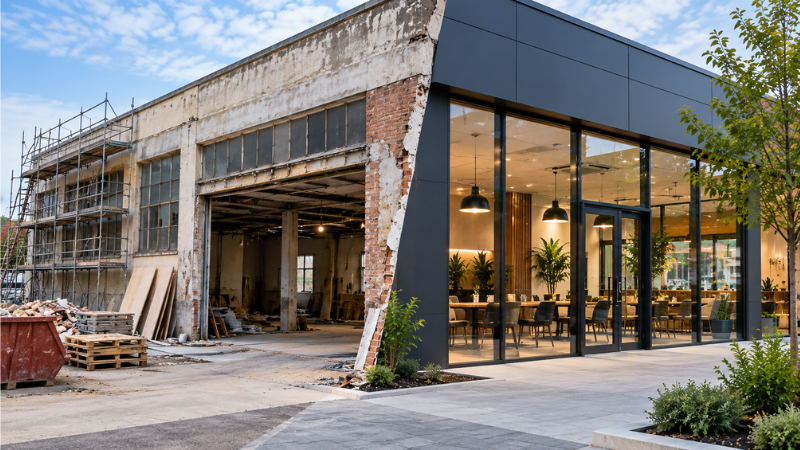
When a Survey Finds a Problem, It Doesn’t Always Mean Digging Everything Up
One reason businesses sometimes avoid investigating drainage is the fear that finding a defect automatically means a huge excavation project. That isn’t necessarily the case. The appropriate repair depends on the type, location and severity of the defect.
Some drainage problems can be addressed using no-dig repair techniques, while others may require excavation to expose and replace damaged sections properly. The important part is having enough information to choose an appropriate solution rather than guessing.
Where excavation is required, United Drains provides drain excavation and repair services for commercial properties.
A Little Investigation Can Save a Lot of Head Scratching
Commercial refurbishment projects involve dozens of trades, deadlines and decisions. Drainage isn’t necessarily the most exciting item on that list, and in many cases it won’t cause any trouble at all.
But unlike a paint colour or a piece of office furniture, changing the drainage after everything else has been finished can be complicated. Knowing the layout, condition and access points of the existing system gives property owners, facilities managers and incoming businesses much better information to work with.
It can highlight potential issues before they become disruptive and provide useful records for whoever is responsible for the property in the future. Most importantly, it means that when the newly refurbished building opens its doors, the infrastructure underneath it hasn’t simply been forgotten.
Planning a Commercial Refurbishment?
If you’re refurbishing a commercial property, taking over a new premises or changing how a building is used, United Drains can help you understand the drainage system you’re working with.
From CCTV surveys and drainage investigations to cleaning, maintenance and repairs, our team works with commercial properties across a wide range of sectors. It is much easier to ask “what’s going on underneath this building?” before there is a problem than after one.
Need advice about the drainage at your commercial property? Speak to United Drains on 0203 637 6688 or contact our team online.